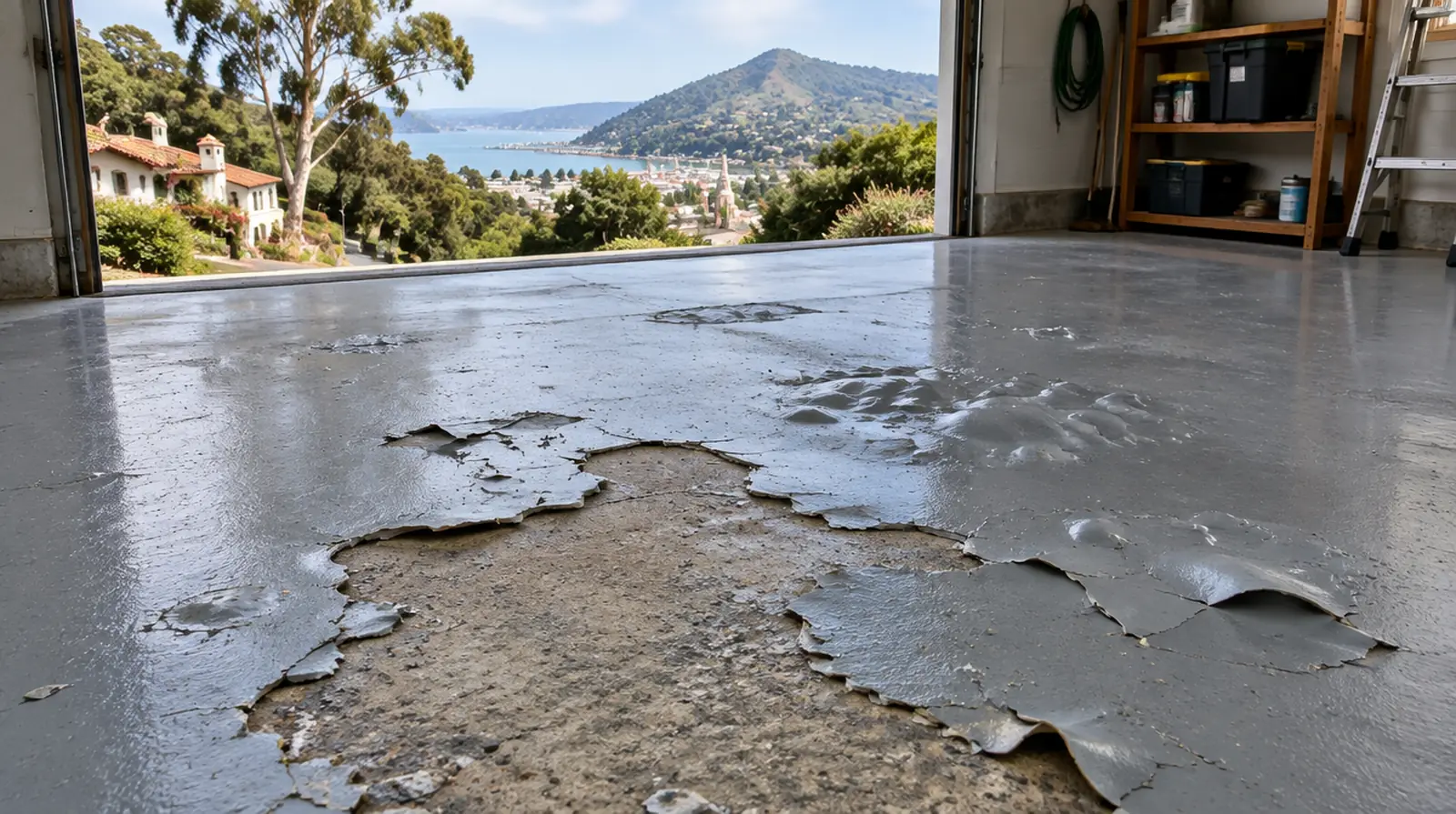
Why coatings fail
We get called to many floors that were coated only a year or two before. The causes are usually the same. The slab was not ground, just washed or acid etched, so the coating had nothing solid to grip. Moisture coming up through the concrete was never tested, and vapor pressure lifted the coating from below. A thin, low-solids kit wore through quickly under hot tires. Or the coating was applied over old paint or sealer that then let go and took everything with it.
In San Rafael, moisture is a frequent factor. Slabs near the bay and the canal sit close to groundwater, and hillside garages often take on water along the uphill wall. When a coating that cannot breathe goes over a damp slab, it bubbles, hazes and peels. Repairing that floor without addressing moisture just repeats the failure.
Diagnosing the problem
Every repair starts with a careful look. We examine where the coating is failing and how. Peeling near the door often points to hot tire pickup or poor prep. Bubbles and blisters spread across the floor point to moisture or outgassing. Cracks running through the coating usually follow cracks in the slab. White haze can be moisture or a curing issue. We test for moisture, check the bond in areas that still look sound and explain what we find.
Spot repair or full replacement
If the failure is limited and the rest of the coating is well bonded, a spot repair can work. We cut back to sound coating, grind the area, repair the concrete and rebuild the system. Color match is easier with flake floors, since the pattern hides transitions. Solid colors can be tricky to blend, so we may recommend a fresh topcoat over the whole floor for a uniform look.
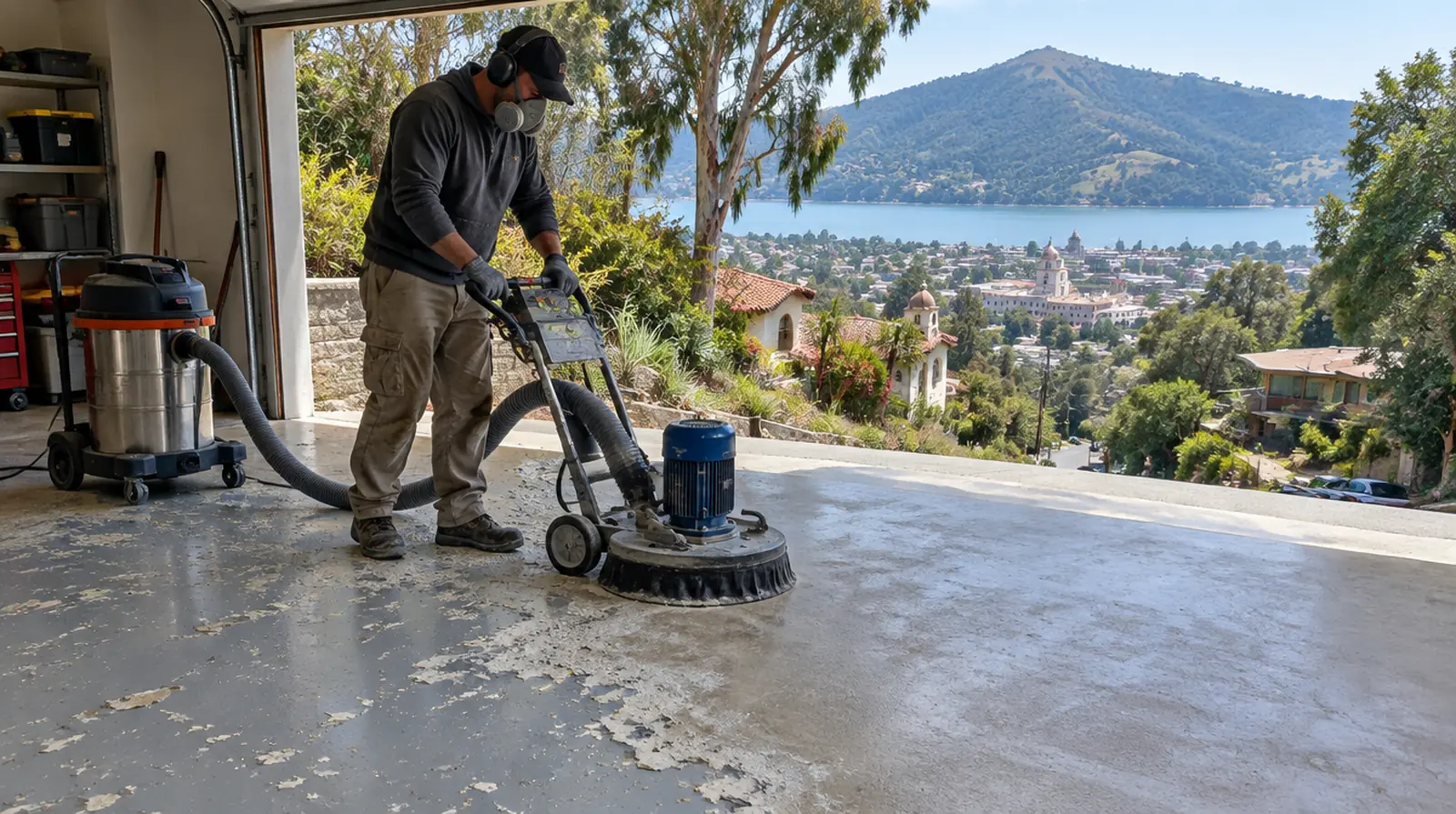
When the coating is failing across much of the floor, patching is a waste. The bond is poor everywhere, and more sections will lift soon. In that case we grind off the entire coating, prepare the slab properly and install a new system. That costs more up front, but it is the only fix that lasts.
Removing failed coatings
Removing an old epoxy floor takes heavy diamond grinding with dust control. Loose areas come up quickly, while well-bonded sections take more work. We grind until we reach clean, sound concrete, then repair cracks and pits before recoating. If moisture caused the failure, we use a moisture-mitigating primer or suggest a breathable system.
Cracks and slab damage
Cracks in the coating often mirror cracks in the slab. We route out the crack, clean it and fill it with a product matched to the movement: rigid fillers for stable cracks, flexible ones for joints and cracks that still shift. Spalled edges near the garage door and pitted areas get patched and ground flush. If a crack shows signs of ongoing structural movement, we explain that and suggest an evaluation before recoating.
Stains, wear and dull finishes
Not every floor needs a major repair. Some just look tired, with dull traffic paths, scratches or stains from tire plasticizers. A light sanding and fresh topcoat can restore the look for a fraction of the cost of a new floor. We can also switch to a more stain-resistant or UV-stable topcoat, such as polyaspartic, if yellowing near the door was a problem.
Floors from other installers
We are happy to fix floors installed by anyone, including DIY kits and other contractors. We do not judge, and we do not oversell. If a modest repair will solve the problem, that is what we recommend. If the floor needs to come out, we explain why with photos and test results.
Commercial repairs
Businesses with damaged floors often cannot shut down for long. We can repair sections in phases, work after hours and use fast-curing materials to return areas to service quickly. Kitchens, shops and warehouses with worn coatings benefit from scheduled recoats before damage reaches the slab.
Preventing future failures
The best repair is the one you never need. Proper grinding, moisture testing, quality materials and the right topcoat prevent nearly every failure we see. When we install a new floor after a repair, we document the system and explain care so it lasts. Simple habits such as using mats under cars, cleaning with gentle products and lifting heavy items rather than dragging them make a real difference.
Questions
Can you match my existing floor?
Flake floors usually blend well. Solid colors may need a full topcoat for uniformity.
How long does removal take?
Most garages can be stripped and recoated in two to three days.
Will the new floor fail too?
Not if the cause is fixed. That is why we diagnose before we repair.
Floor peeling or bubbling? Send photos or book a visit and we will tell you what is going on.
Get a repair assessment
Call (628) 304-0751 for a free estimate.