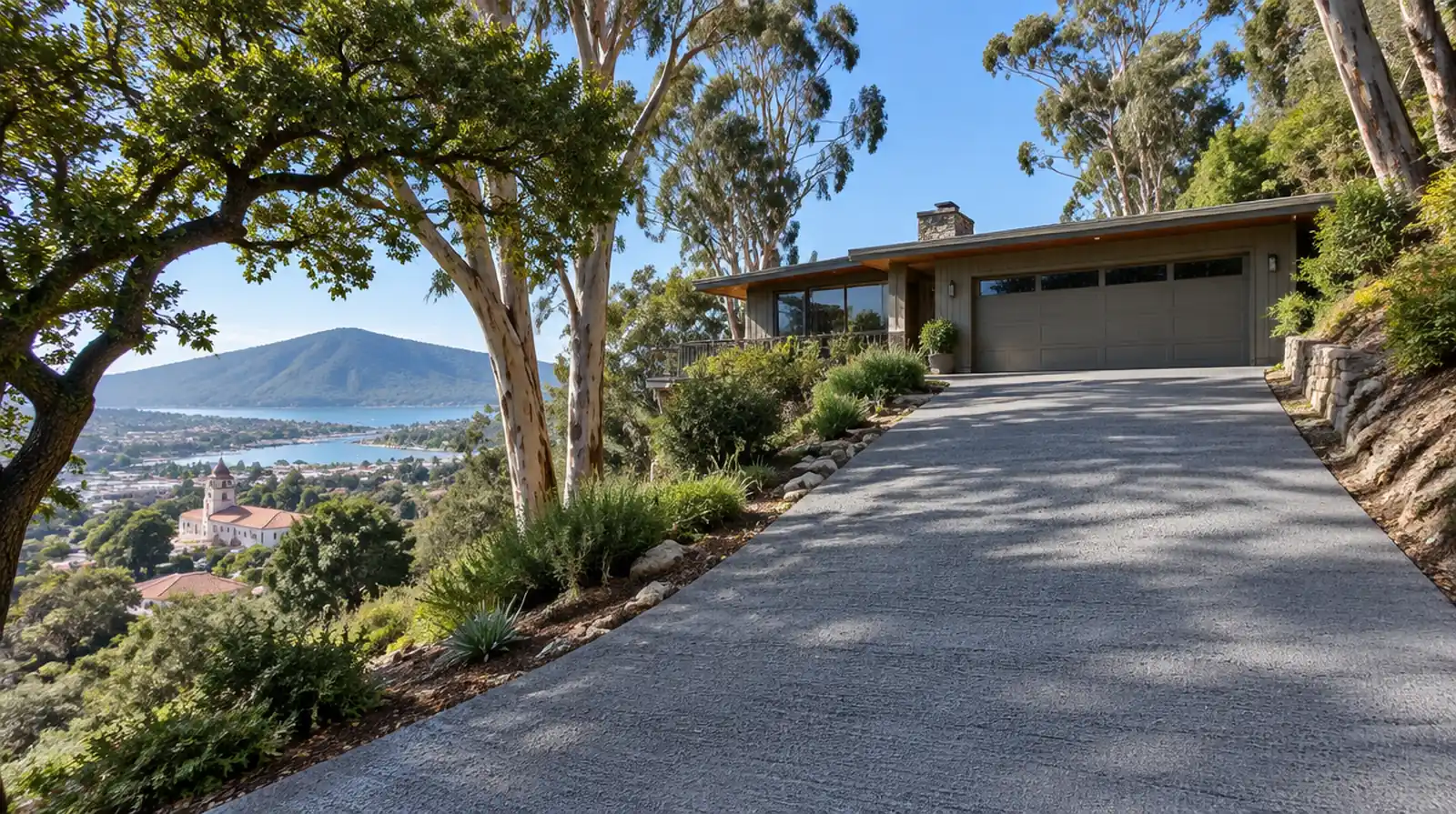
Driveways on steep ground
Many homes in San Rafael sit high above or below the street, and their driveways climb at angles that would surprise visitors from flatter towns. Those drives carry cars, delivery vans, trash bins and people on foot in every kind of weather. When winter rain pours down the slope, or when leaves and eucalyptus bark pile up, a smooth driveway can become slick. Over the years, the surface wears, stains and develops cracks as the hill shifts slightly with the seasons.
A driveway coating or sealer protects the concrete, improves its appearance and, most importantly, can add traction. We choose systems specifically for exterior use, which means they have to handle sun, rain, temperature swings, tire traffic and the occasional oil drip without peeling.
Options for driveways
Penetrating sealers
For drives in good shape, a silane or siloxane sealer soaks in, repels water and leaves the surface texture unchanged. It is breathable and will not peel, and it is the lowest-maintenance option.
Textured coatings
For worn or stained driveways, or steep drives that need more grip, we apply a UV-stable coating with broadcast aggregate. The texture provides traction for tires and shoes, and the color refreshes a tired surface.
Resurfacing overlays
Badly worn or pitted drives can be resurfaced with a polymer-modified cement overlay, then textured and sealed. This gives a near-new surface without tearing out the slab.
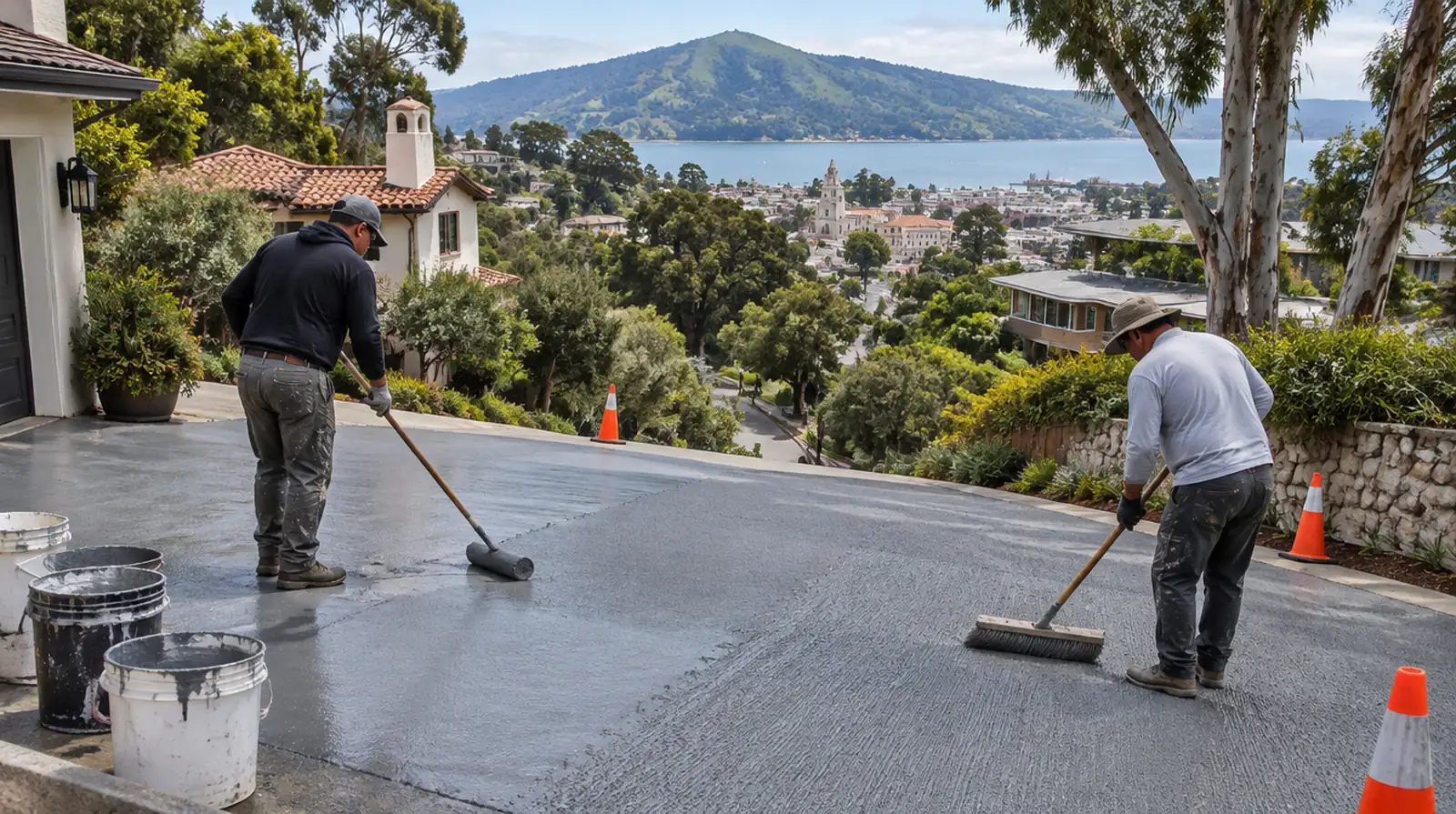
Preparation on exterior concrete
Exterior prep is thorough. We pressure wash, remove oil and rust stains as much as possible and treat moss and algae. Peeling sealers and paint get stripped. For coatings, we grind or shot blast to create a profile. Cracks are routed and filled with flexible materials designed for exterior movement, and spalled areas are patched. Control joints can be preserved so the slab can still move without cracking the coating.
Drainage and runoff
On hillside lots, water management is part of a lasting driveway. We look at where water enters the drive, where it pools and where it exits. Coatings and sealers are not a substitute for drainage, and we will tell you if a trench drain or regrading would help. Keeping water moving off the drive reduces moss, staining and freeze-thaw style surface wear from repeated wetting and drying.
Traction where it matters
Slip resistance is our priority on sloped drives. We adjust the size and amount of aggregate in the coating to match the slope and use. Steeper sections get more texture. Areas where people walk, like the path from the car to the front steps, can get a finer texture that is easier on bare feet. We also consider the sheen, since high-gloss finishes can look great but feel slick when wet.
Colors and looks
Most driveway coatings come in natural grays, tans and charcoals that blend with the home and landscape. Lighter colors stay cooler in the sun. Darker colors hide oil and tire marks better. We can also apply decorative borders or bands to break up a long drive or match a patio.
Garage aprons
The apron where the driveway meets the garage often takes the most wear, from hot tires, rainwater and the weight of vehicles turning. If you are coating the garage floor, it often makes sense to treat the apron at the same time so the transition looks clean and the edge is protected. We use exterior-rated products on the apron even when the garage gets an interior system.
Commercial lots and pads
We also coat small commercial parking pads, loading areas, ramps and sidewalks. Ramps in particular benefit from textured coatings that improve footing for customers and staff. Work can be scheduled around business hours.
Maintenance
Sweep leaves and debris regularly, rinse off dirt and clean oil spots quickly. Keep gutters and drains clear so water does not run across the drive unchecked. Sealers usually need reapplication every few years. Coatings last longer but may need a fresh topcoat in high-traffic areas over time. We provide care instructions with every job.
Questions
Will a coating peel in the sun?
Not when we use UV-stable exterior products over properly prepared concrete.
Can you coat a cracked driveway?
Yes, after repairs. Wide or moving cracks may still show over time.
How soon can I drive on it?
Sealers often allow traffic the next day. Coatings usually need two to three days.
Need a safer, better-looking driveway? Book a free estimate.
Get a driveway estimate
Call (628) 304-0751 for a free estimate.