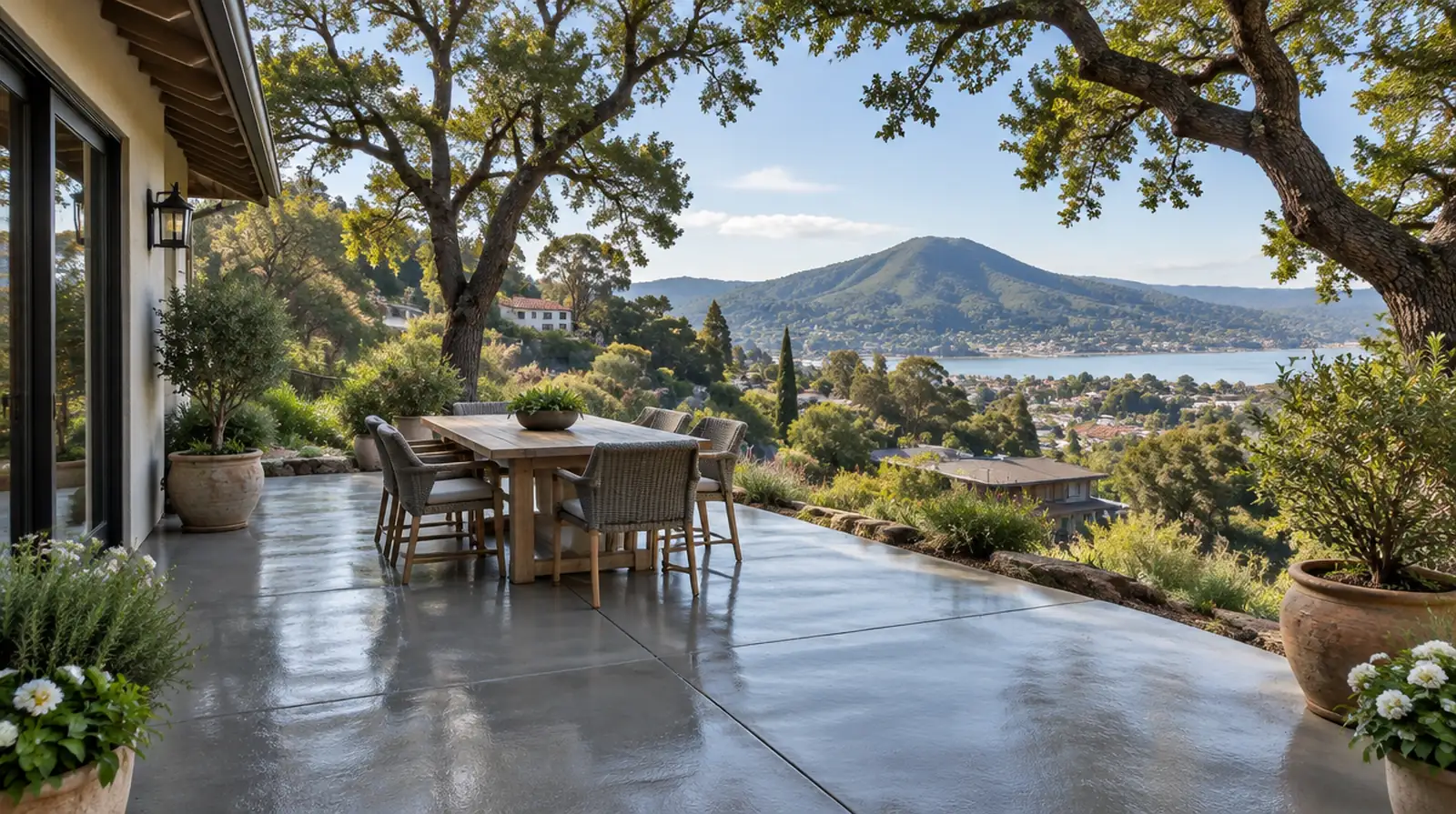
Why seal outdoor concrete
Concrete is porous. Rain, irrigation water, leaves, oil, food spills and dirt soak into it, leaving stains and feeding moss and algae in shady spots. In winter, water that soaks in can loosen the surface and cause flaking and pitting over time. Salt air near the bay adds another layer of wear. A good sealer reduces how much water and grime the slab absorbs, makes cleaning easier and helps protect the surface.
Many San Rafael homes have patios, steps and walkways shaded by oaks, eucalyptus and redwoods. Those shady areas stay damp longer and grow moss and black algae quickly, making them slick and stained. Sealing, after a thorough cleaning, slows that growth and keeps the concrete looking fresh.
Types of sealers
Penetrating sealers
Silane and siloxane sealers soak into the concrete and repel water from inside the pores. They do not change the look much, they do not create a film that can peel and they let moisture vapor escape. They are our usual choice for walkways, steps, driveways and pool decks where traction and breathability matter.
Film-forming sealers
Acrylic and urethane sealers form a thin film on the surface. They can enhance color and add sheen, giving a wet look on stamped or colored concrete. They need more maintenance and can become slick when wet, so we often add a grip additive and use them selectively.
Preparation
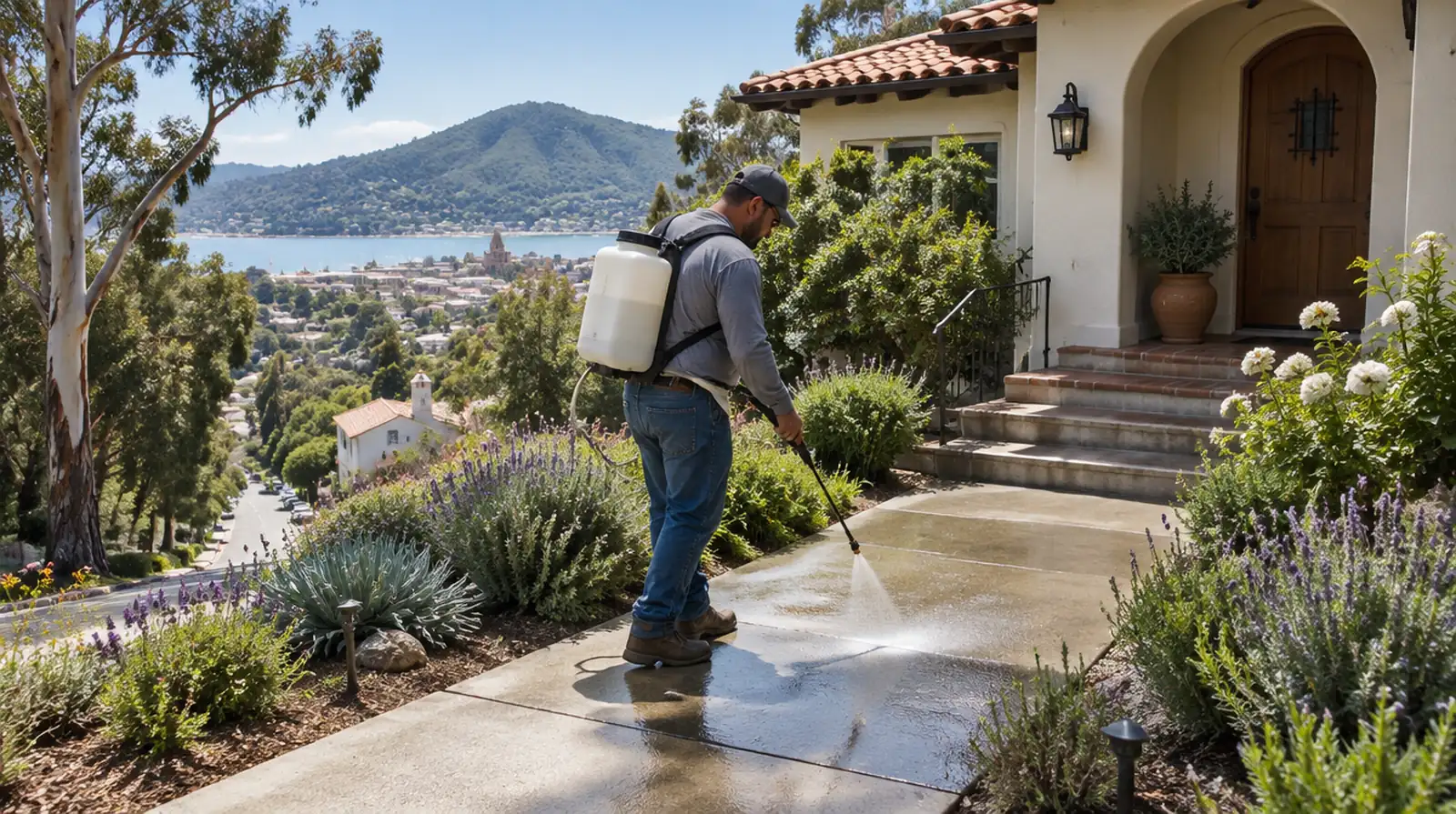
Sealer only works on clean concrete. We pressure wash the surface, treat moss and algae, remove oil and rust stains where possible and let the slab dry. Old sealers that are peeling or hazy are stripped before we apply new product. On older concrete we may repair cracks and chips so water does not get underneath. Then we apply the sealer by sprayer or roller in even coats, following the product's coverage rate.
Surfaces we seal
Patios and outdoor dining areas. Front walks and steps. Pool decks. Driveways and parking pads. Stamped and colored concrete. Retaining wall caps. Garage aprons. Commercial walkways, entries and outdoor seating areas. For areas with heavy vehicle traffic or a steep slope, we may recommend a tougher driveway coating instead.
Hillside and shaded properties
Steep lots bring runoff across walks and patios. Water carries soil and leaves onto the concrete and keeps it damp. We look at how water moves across your property and point out areas where drainage changes would help. Penetrating sealers are especially useful here, since they do not trap moisture and they do not create a slippery film on steps.
Stamped and decorative concrete
Stamped patios lose their color and sheen over time as the sealer wears. Resealing restores the depth of color and protects the surface. We clean carefully to avoid damaging the texture, remove failing sealer if it has turned white or cloudy and apply a new coat matched to the original look. A grip additive keeps it safer around pools and steps.
How often to reseal
Penetrating sealers typically last several years before needing reapplication. Film-forming sealers usually need attention every two to three years, depending on sun, traffic and weather. A simple test helps: if water no longer beads on the surface and soaks in quickly, it is time to reseal.
Sealing versus coating
Sealing protects concrete while keeping its natural look. Coatings like epoxy or polyaspartic cover the surface with a new layer that changes color and texture. For outdoor areas, sealing is usually the better choice because it breathes and does not peel in the sun and rain. For garages and interiors, a coating offers more protection and a finished look. We will help you decide which suits each surface.
Caring for sealed concrete
Sweep leaves and debris off regularly so they do not stain or hold moisture. Rinse with water and a gentle cleaner. Treat moss early before it spreads. Avoid harsh chemicals and high-pressure washing too close to the surface. Clean oil and food spills quickly.
Questions
Will sealing make my patio slippery?
Penetrating sealers do not change traction. Film sealers get grip additive where needed.
Can you remove old stains?
Many stains lighten with cleaning, though some deep oil stains may remain.
When is the best time to seal?
Dry periods are ideal. We schedule around rain so the slab is dry before sealing.
Want your outdoor concrete protected? Book a free estimate.
Get a sealing estimate
Call (628) 304-0751 for a free estimate.